
Most people don’t notice skin laxity when it first starts. But they notice that something looks different…
Their jawline isn’t quite as sharp as it used to be. Their makeup doesn’t sit as smoothly. Their skin feels thinner, less firm, or less resilient. Photos seem slightly different, even if they can’t pinpoint exactly why.
These are often the earliest signs of collagen loss, signaling its time to intervene.
Treatments that stimulate collagen before significant sagging develops can help maintain skin quality, firmness, and structure for years to come.
One of our favorite treatments for this stage of early skin laxity is Vivace RF Microneedling.
What Is Skin Laxity?
Skin laxity refers to a loss of firmness and structural support within the skin.
Healthy skin is supported by collagen and elastin, two proteins responsible for keeping the skin firm, resilient, and capable of snapping back into place after movement.
Over time, sun exposure, environmental stress, and the natural aging process gradually break down these supportive fibers.
As collagen and elastin decline, the skin becomes less resistant to gravity and movement. The earliest signs often include:
- Mild softening along the jawline
- Early jowling
- Crepey skin texture
- Thinning skin
- Less definition through the lower face
- Skin that feels less firm than it once did
These changes can begin long before significant sagging develops.
Skin Texture and Skin Laxity Are Different Problems
One of the biggest misconceptions we see is patients assuming texture and laxity are the same thing. They’re not.
Skin Texture
Texture refers to the condition of the skin’s surface.
When skin feels rough, pores appear enlarged, makeup catches on certain areas, or the skin lacks smoothness and radiance, texture is usually the issue.
Texture changes are often caused by:
- Slower skin cell turnover
- Sun damage
- Acne and inflammation
- Surface roughness
- Fine lines
Skin Laxity
Laxity is a structural issue.
It occurs when collagen and elastin decline within the skin, causing a loss of firmness and support.
This is what creates:
- Loose skin
- Early sagging
- Crepey texture
- Reduced elasticity
- Softening of facial contours
The challenge is that many patients experience both simultaneously.
Fortunately, Vivace RF Microneedling is designed to address both concerns at the same time.
What Is Vivace RF Microneedling?
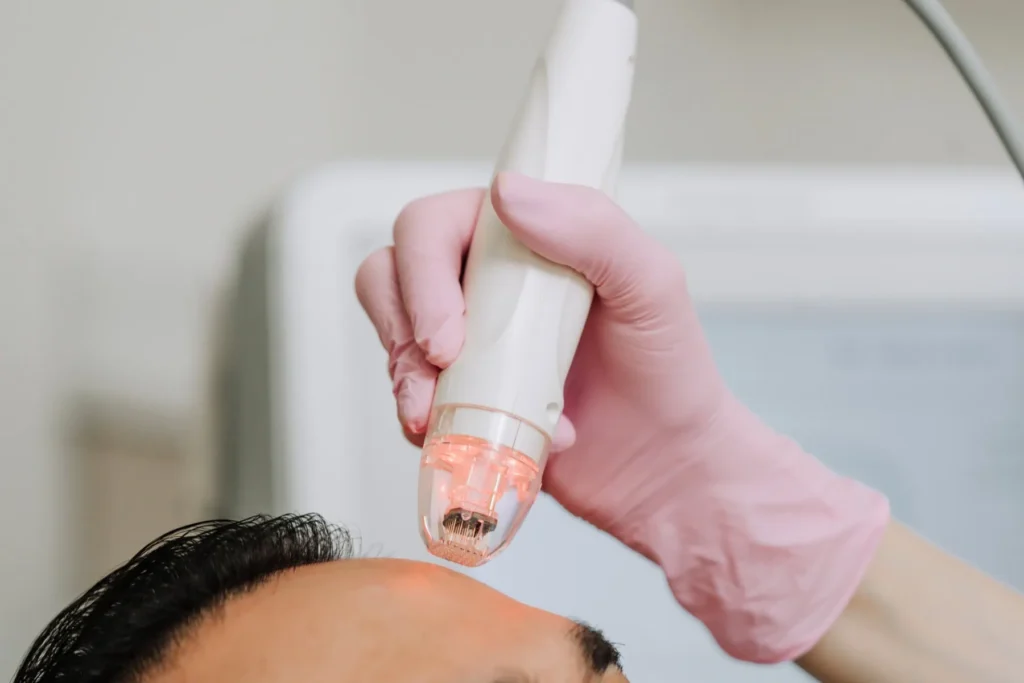
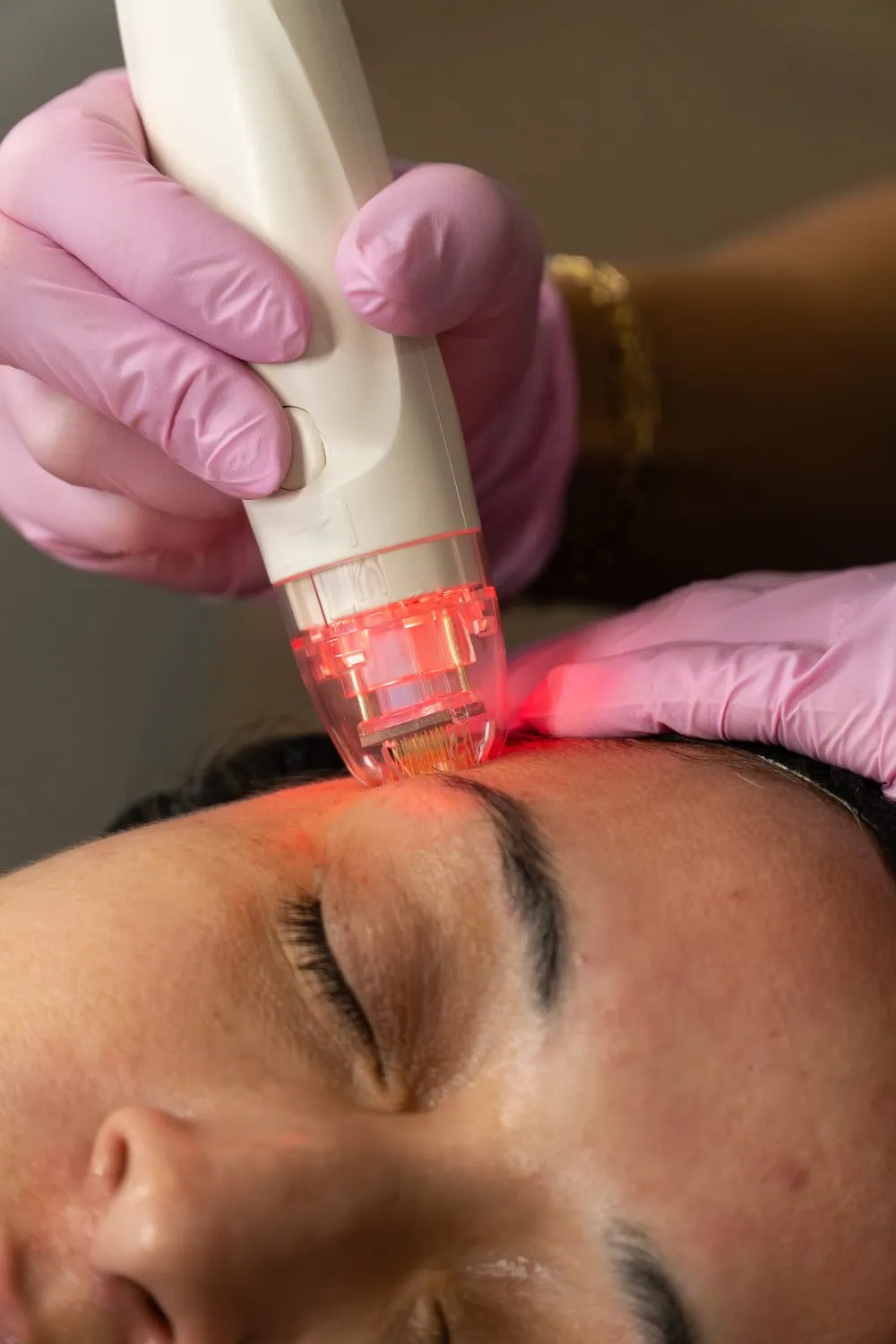
Vivace combines traditional microneedling with radiofrequency energy.
Tiny gold tipped needles create controlled micro injuries in the skin while simultaneously delivering heat into deeper tissue layers.
This dual action approach stimulates the body’s natural healing response and triggers new collagen production. Think of it as a treatment that works both on the surface and beneath it.
The microneedling component helps improve:
- Skin texture
- Fine lines
- Pore appearance
- Surface smoothness
The radiofrequency energy helps improve:
- Skin firmness
- Mild laxity
- Collagen production
- Tissue support
- Overall skin quality
How Does RF Microneedling Work for Skin Tightening?
The radiofrequency portion of Vivace is what makes it different from traditional microneedling.
As the controlled heat reaches deeper layers of the skin, it stimulates collagen remodeling and encourages fibroblasts to produce new collagen and elastin.
This process continues for several months following treatment. As collagen develops, skin gradually becomes:
- Firmer
- Denser
- Smoother
- More resilient
- Better supported
The results appear naturally because they’re being created by your own tissue.
When Should You Start Vivace RF Microneedling?
One of the biggest mistakes patients make is waiting until skin laxity becomes severe before considering collagen stimulating treatments.
Vivace works exceptionally well for patients in their 30s and 40s who are beginning to notice early changes but aren’t ready for more aggressive interventions.
The earlier collagen loss is addressed, the easier it is to maintain healthy skin structure over time. This is why we often think of Vivace as a preventative and corrective treatment.
It helps improve existing concerns while supporting the skin against future collagen loss.
What Areas Can Vivace Treat?
Vivace RF Microneedling is incredibly versatile.
Common treatment areas include:
- Face
- Jawline
- Neck
- Chest
It’s especially popular for patients noticing early laxity along the lower face and neck.
Vivace vs Traditional Microneedling
Traditional microneedling stimulates collagen through controlled micro injury.
Vivace takes that process further by adding radiofrequency energy.
The combination allows us to address both the surface of the skin and the deeper structural layers simultaneously.
For patients concerned about skin tightening, Vivace typically produces more significant collagen stimulation than microneedling alone.
How Many Vivace Treatments Are Needed?
Most patients benefit from a series of three treatments spaced several weeks apart.
Collagen production takes time, so improvements continue developing for months after treatment.
Many patients choose annual maintenance treatments to continue supporting collagen production and skin quality over time.
Building Stronger Skin Before You Need To
Sometimes what the skin needs most is stronger collagen. Vivace RF Microneedling addresses one of the earliest drivers of facial aging, declining skin support.
By improving both skin texture and skin laxity simultaneously, it helps patients maintain firmer, smoother, healthier looking skin long before significant sagging develops.
When it comes to collagen, earlier is almost always better.
That’s why Vivace remains one of our favorite treatments for patients who want to stay ahead of the aging process rather than spend years trying to catch up to it.