
When most people hear “cheek filler,” they picture dramatic cheekbones and sharply sculpted faces. But in aesthetic medicine, adding volume to the cheeks isn’t just creating more definition.
More often, it’s focused on restoring support.
Understanding the difference between midface support and cheek contouring is one of the most important concepts in facial balancing because they serve very different purposes and create very different results.
Why the Midface Matters
The midface acts as a structural foundation for much of the face.
Over time, the fat pads in the cheeks gradually lose volume and begin to shift downward. As that support weakens, the tissues sitting above it follow.
This often creates concerns such as:
- Under eye hollowing
- Deepening nasolabial folds
- Heaviness around the mouth
- Early jowling
- A tired or drawn appearance
Many patients come in asking us to treat these concerns directly.
The interesting part is that the root cause is often higher up in the face.
When we restore support in the midface, we can frequently improve these areas without injecting them directly.
What Is Midface Support Filler?
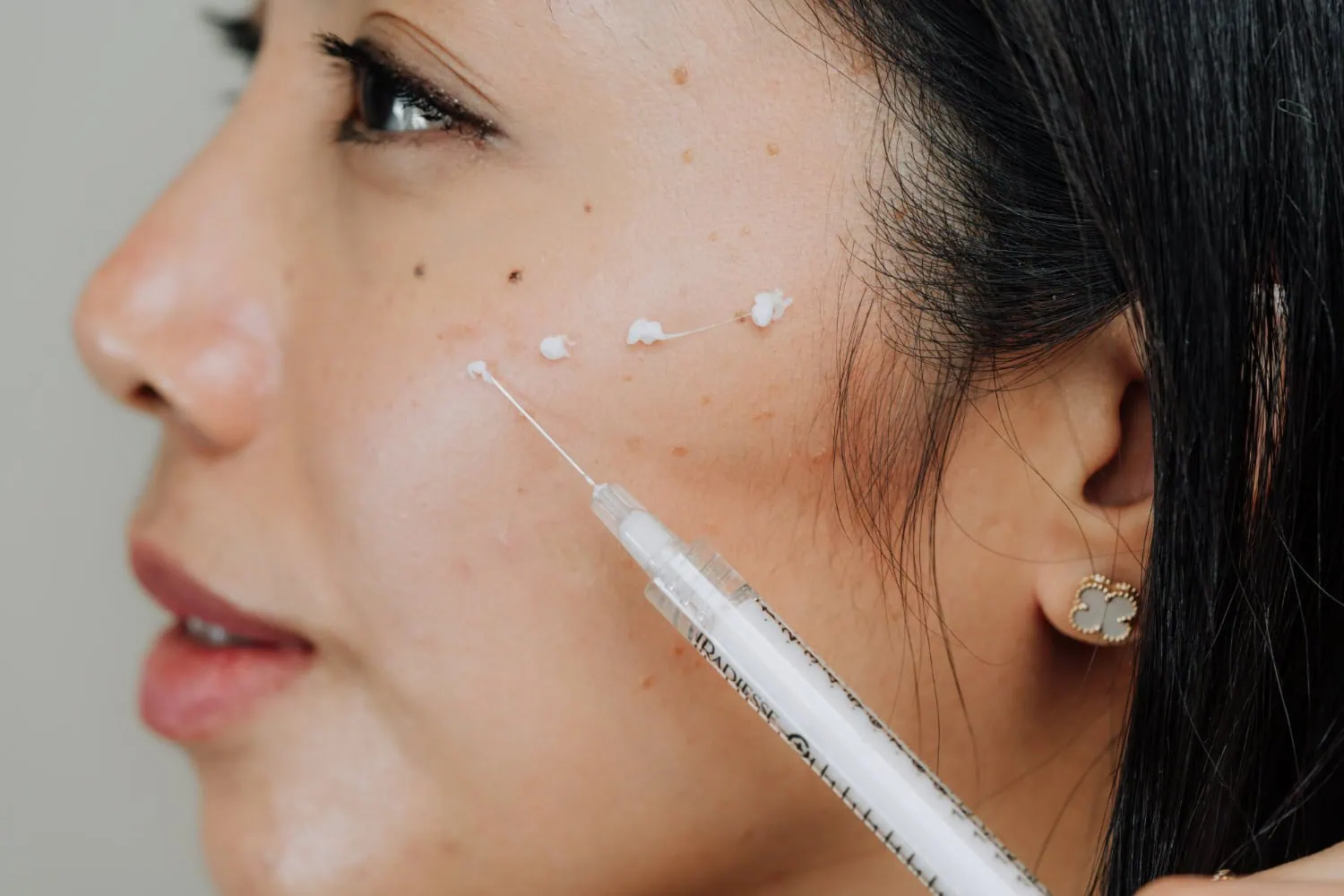
Midface support focuses on restoring volume through the central portion of the cheek, sometimes called the apple of the cheek.
The purpose isn’t to create larger cheeks. It’s to rebuild the structural support that has gradually been lost over time.
When strategically placed, midface filler can:
- Support the under eye area
- Reduce the appearance of tear trough hollowing
- Decrease heaviness around the mouth
- Soften nasolabial folds
- Restore youthful facial proportions
- Create a more rested appearance
Patients often tell us: “I don’t look old. I just look tired.”
This is exactly the type of thing that midface support can help address.
What Is Cheek Contouring Filler?
Cheek contouring focuses on the outer cheek and cheekbone area.
This treatment is less about support and more about structure and definition. This is usually what people think of when they hear “cheek filler.”
Lateral cheek filler can:
- Enhance cheekbone projection
- Improve facial shape
- Create more definition through the upper face
- Strengthen facial contours
- Improve balance between facial features
This type of placement is often chosen by patients who want more visible cheekbone structure or who naturally have flatter facial contours.
Unlike midface support, the purpose is not necessarily to improve under eyes or nasolabial folds, but rather to create shape.
Can Cheek Filler Help Under Eyes and Smile Lines?
Yes, but it depends on where the filler is placed.
One of the biggest misconceptions we see is the belief that every under eye hollow needs tear trough filler, or every smile line needs filler placed directly into the fold.
In many cases, restoring support through the midface creates improvement in both areas. By rebuilding the foundation beneath the tissue, the face often lifts and redistributes itself more naturally.
This is why facial balancing frequently produces more natural looking results than treating each concern individually.
Hyaluronic Acid (HA) Filler vs Sculptra for Midface Support
There are several ways to restore midface support.
HA fillers such as Juvederm, Restylane and RHA provide immediate structural support and precise placement. They are excellent when we want targeted correction and instant results.
Sculptra works differently.
Rather than acting as a filler, it stimulates your body to gradually produce collagen over time. This creates diffuse support throughout the midface and helps restore volume more gradually.
Depending on patient goals, the best outcome can come from combining both approaches.
Will Cheek Filler Make My Face Look Wider?
This is one of the most common concerns we hear.
When filler is placed strategically to restore support, we’re not trying to make the face appear wider.
Restoring support can often make the lower face appear lighter and more balanced because less tissue is collecting around the mouth and jawline.
Done properly, cheek filler should make you look rested, refreshed, and structurally supported, not puffy, overfilled, or weird looking.
Support First, Volume Second
When patients tell us they don’t want cheek filler, what they’re often saying is that they don’t want to look overfilled.
We don’t want that either. We just want to restore support where it’s been lost so the entire face looks more rested, balanced, and refreshed.
When placed with precision and intent, midface support doesn’t make you look different. It helps you look like yourself again.