
Neck tightening in Scottsdale is one of the most overlooked parts of aesthetic treatments.
Your face might look smooth, lifted, and refreshed. But if your neck and chest aren’t treated, they will give everything away.
The neck ages faster than the face. It gets just as much sun (usually more), significantly less SPF, and has thinner skin with fewer oil glands. That combination makes it more vulnerable to early laxity, wrinkles, and discoloration.
This is why we never stop at the face.
Why the Neck and Chest Age Faster
Most people don’t think about their neck or décolletage until the changes are obvious. By then, there are often years of cumulative sun damage and collagen loss already in place.
The skin in these areas is structurally different. It’s thinner, more delicate, and less resilient. Add constant movement, looking down at phones and computers, repetitive muscle contraction, daily sun exposure, and the changes start to show earlier than expected.
This is why patients often ask: “Why does my neck look older than my face?”
Because it is aging faster.
The Subtle Signs You’re Starting to Notice
Neck and chest aging doesn’t show up all at once. It builds gradually.
Most patients notice:
- Horizontal “tech neck” lines that don’t go away
- Vertical platysmal bands when speaking or flexing
- Crepey, thinning skin
- Sun spots and uneven tone on the chest
- Early sagging along the jawline and upper neck
These are early signals. And this is exactly when treatment works best.
Treating Horizontal Neck Lines (Tech Neck)
Tech neck lines are caused by repetitive downward movement combined with collagen loss. Over time, those lines stop bouncing back.
The most effective approach is to soften the tension in the skin while improving its quality.
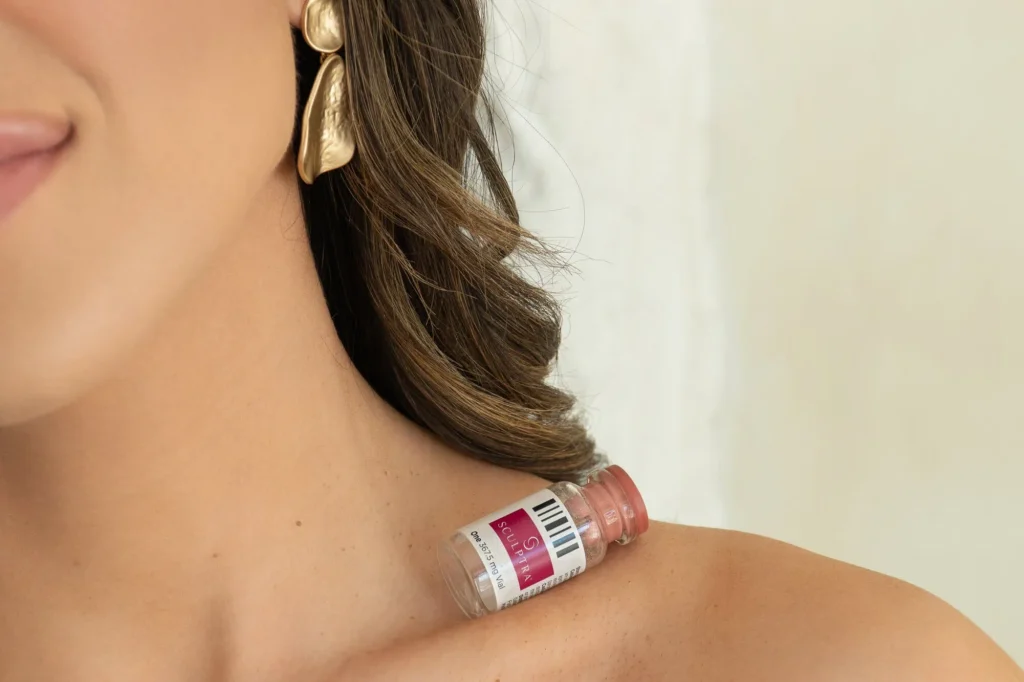
A touch of neurotoxin helps relax the surface tension without affecting deeper movement. For deeper lines, treatments like CoolPeel CO2 laser or collagen stimulators such as Sculptra and Radiesse help rebuild the skin itself.
Treating Platysmal Bands and Jawline Pull
The platysma is a thin sheet of muscle that runs across the neck. As it becomes more active, it creates vertical bands and contributes to downward pull on the lower face.
Botox or Dysport for platysmal bands is one of the most effective ways to soften this.
An added benefit is improved jawline definition. When the downward pull is reduced, the jawline above appears sharper and more supported.
Lower Face DAO and Chin
The neck and lower face work together.
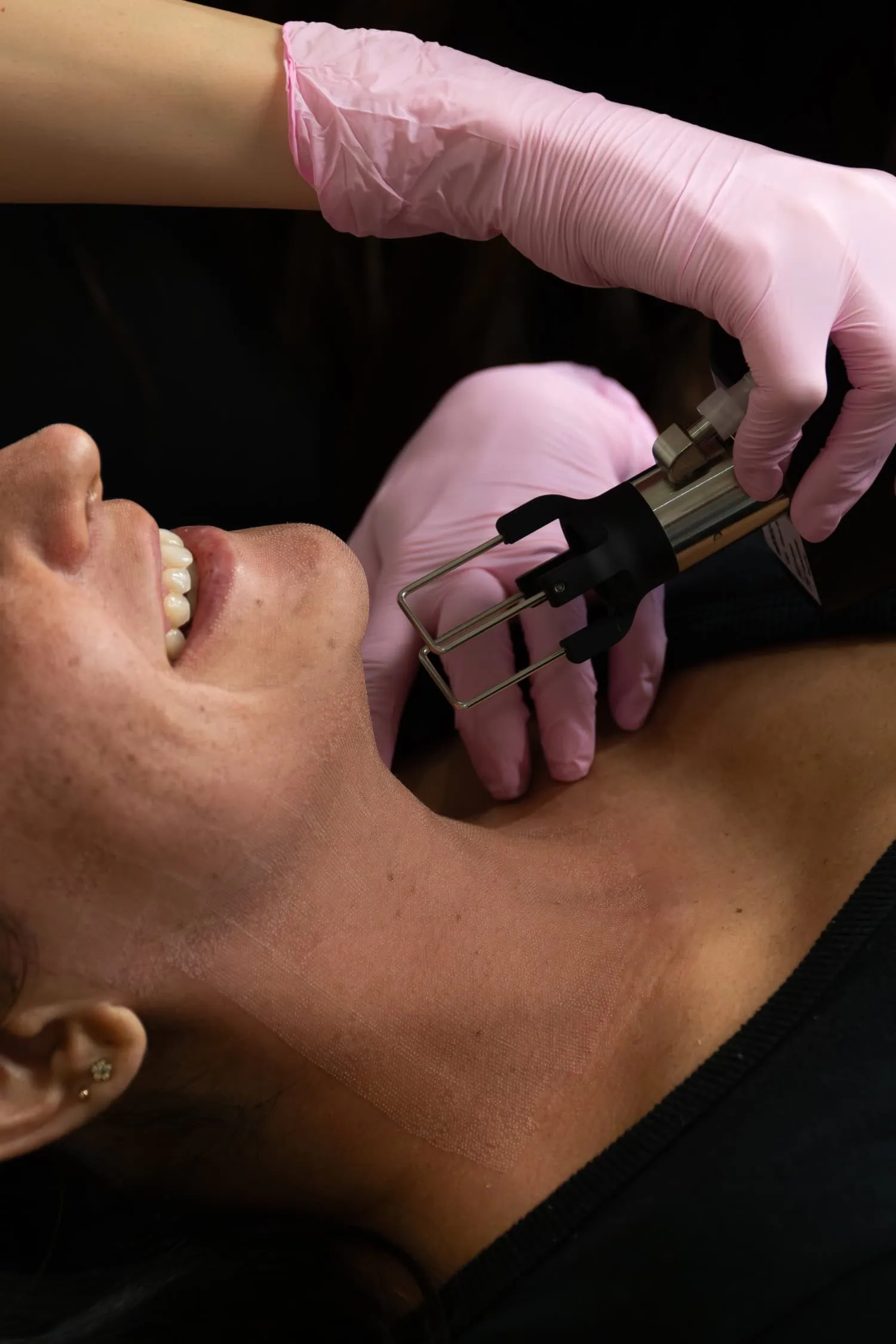
The DAO (depressor anguli oris) muscles pull the corners of the mouth downward, while the mentalis creates chin dimpling and shadowing. Together they contribute to a heavier, more aged appearance.
A small amount of neurotoxin in these areas rebalances that pull, creating a softer, more lifted resting expression without adding volume.
Sun Damage on the Chest and Neck
The décolletage is one of the most sun-exposed and least protected areas of the body.
Over time, this leads to brown spots, uneven tone, and visible aging.
Laser treatments are highly effective here. MotusAZ+ helps clear pigmentation, while CoolPeel and CO2 laser resurfacing improve overall tone and texture.
Yes, laser resurfacing can absolutely be used on the neck and chest, and it often should be.
Treating Crepey Skin and Collagen Loss
Crepey skin is one of the most common concerns in the neck and chest. It happens when collagen and elastin decline, leaving the skin thin, fragile, and textured.
Collagen stimulating treatments like Sculptra and hyperdilute Radiesse rebuild structure over time, making the skin thicker and more resilient.
We often start here, then layer in laser resurfacing for additional refinement.
Non-Surgical Neck Tightening
When it comes to non-surgical neck tightening in Scottsdale, not all treatments are equal.
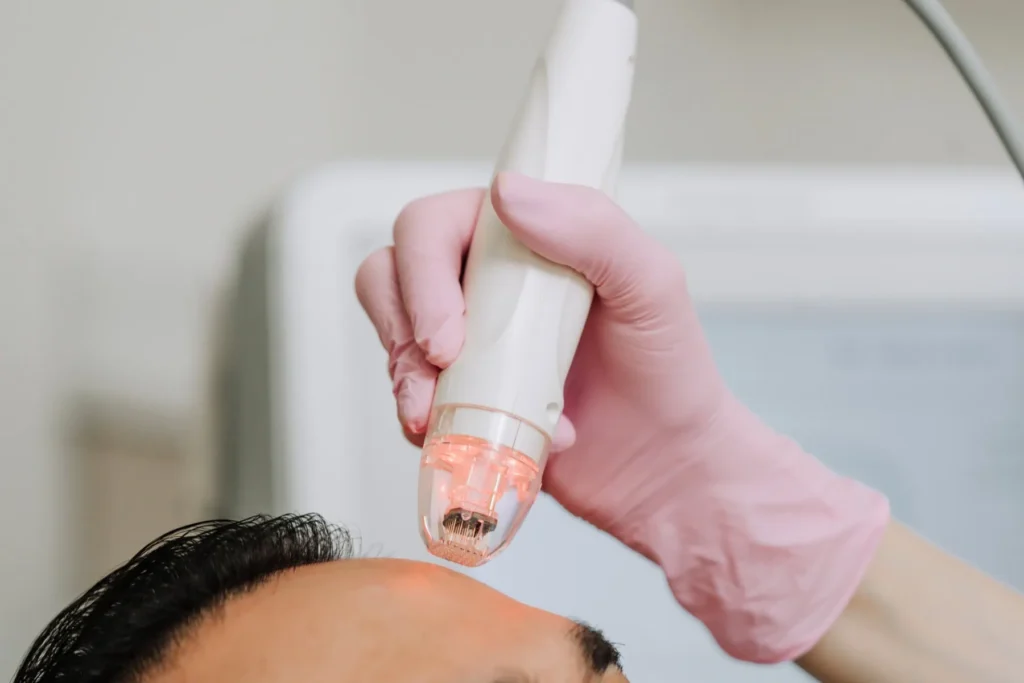
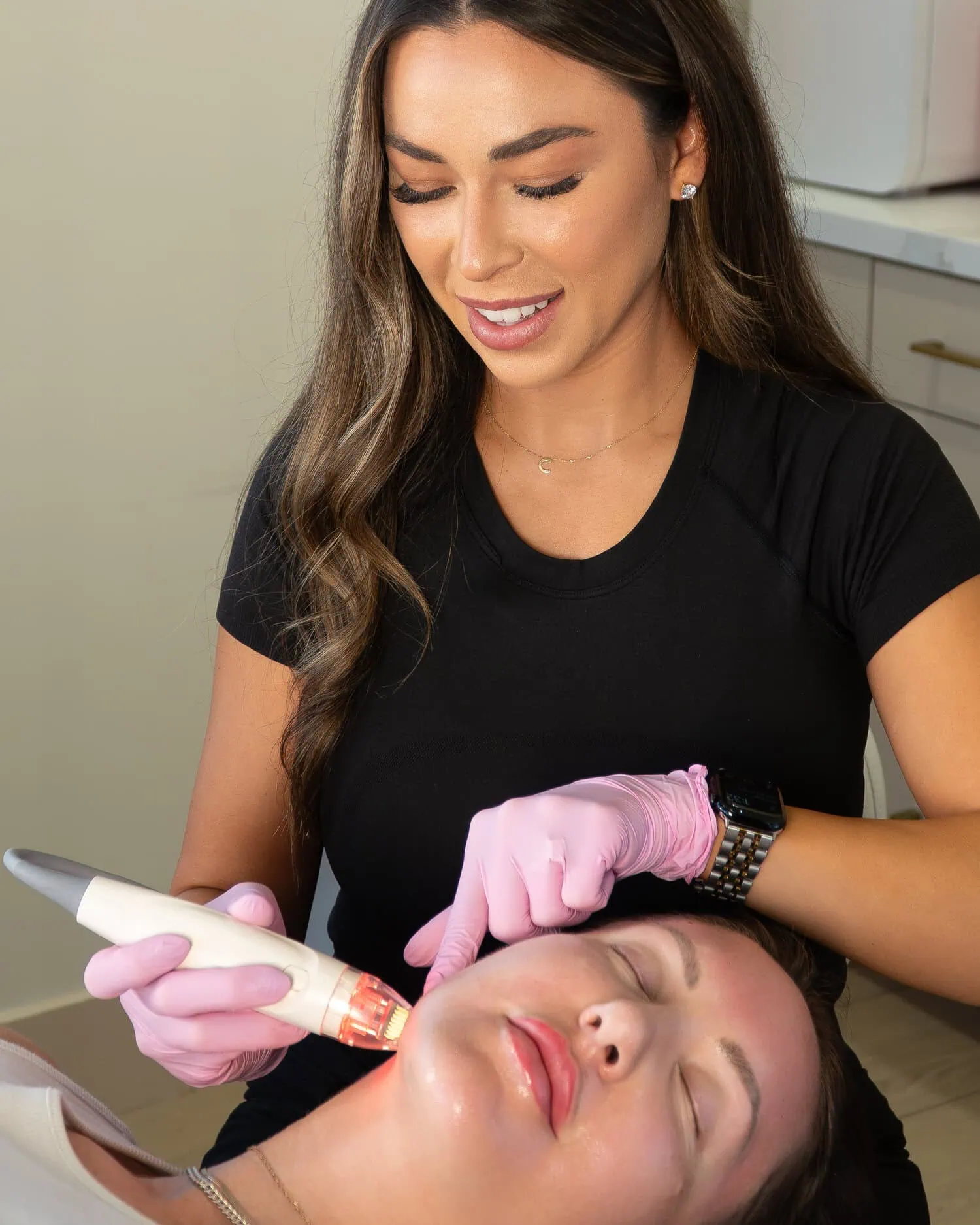
Vivace RF microneedling is one of the most effective options for skin laxity. It combines microneedling with radiofrequency energy to stimulate collagen deep within the tissue.
This improves skin thickness, tightness, and overall structure, making it ideal for early sagging and long term maintenance.
Why Treating the Face Alone Doesn’t Work
This is where most people go wrong.
They invest in their face and ignore the neck and chest. The result is a mismatch. A smooth, treated face sitting above untreated, aging skin.
Aesthetic results are only as good as their weakest link.
If the goal is natural, cohesive results, the neck and chest need to be part of the plan.
When Should I Treat My Neck and Chest?
The neck and chest are not secondary areas, they are essential to how we perceive aging. Because they receive more sun, less protection, and have inherently thinner skin, they often age faster than the face. Treating them early and consistently creates results that look balanced, natural, and actually last.
If you’re starting to notice changes in your neck or chest, you’re catching it at the right time.
With the right combination of treatments, targeting muscle movement, collagen loss, and skin quality, you can prevent progression and restore a smoother, more supported appearance.