
Jowls are one of the most common concerns patients bring up when they start noticing aging in the lower face. That softening or heaviness along the jawline doesn’t happen overnight, and it isn’t caused by just one thing. Jowls form when multiple layers of facial tissue begin to shift, weaken, or lose structure over time. To treat jowls effectively, we need to understand why they form in the first place.
What Causes Jowls?
Jowling is rarely caused by just one issue. It is usually the result of several structural changes occurring simultaneously.
1. Loss of Skin Firmness
As collagen and elastin decline with age, the skin becomes thinner, weaker, and less elastic. Without its former strength and bounce, the skin along the jawline begins to loosen and descend.
2. Fat Pad Changes
The deep fat pads that once provided structure begin to deflate, while the superficial fat pads shift downward. This combination creates hollows higher in the face and heaviness lower in the face, contributing to visible jowls.
3. Ligament Changes
The facial ligaments that anchor the skin and fat in place begin to behave differently with age. Whether they loosen or stiffen, the result is the same: reduced support along the jawline.
4. Muscle Pull
The DAO muscles (responsible for pulling the corners of the mouth downward) and the platysma (the vertical neck bands) can accentuate sagging when they become overactive, dragging the lower face down.
Jowls rarely come from a single cause. Most patients experience a combination of changes, which is why the most effective treatment plans address multiple layers rather than relying on one modality.
Top Treatments for Jowls
Because jowls result from structural, muscular, and skin-level changes, the best outcomes come from a customized approach targeting all relevant tissues. Depending on your anatomy and goals, treatment may include one or more of the following:
Biostimulators for Structural Support
Biostimulators like Sculptra and Radiesse stimulate collagen production in the deeper layers of the skin. By rebuilding the internal scaffolding, they add lift, restore support, and improve the firmness of the jawline over time.
Filler for Pre-Jowl Volume
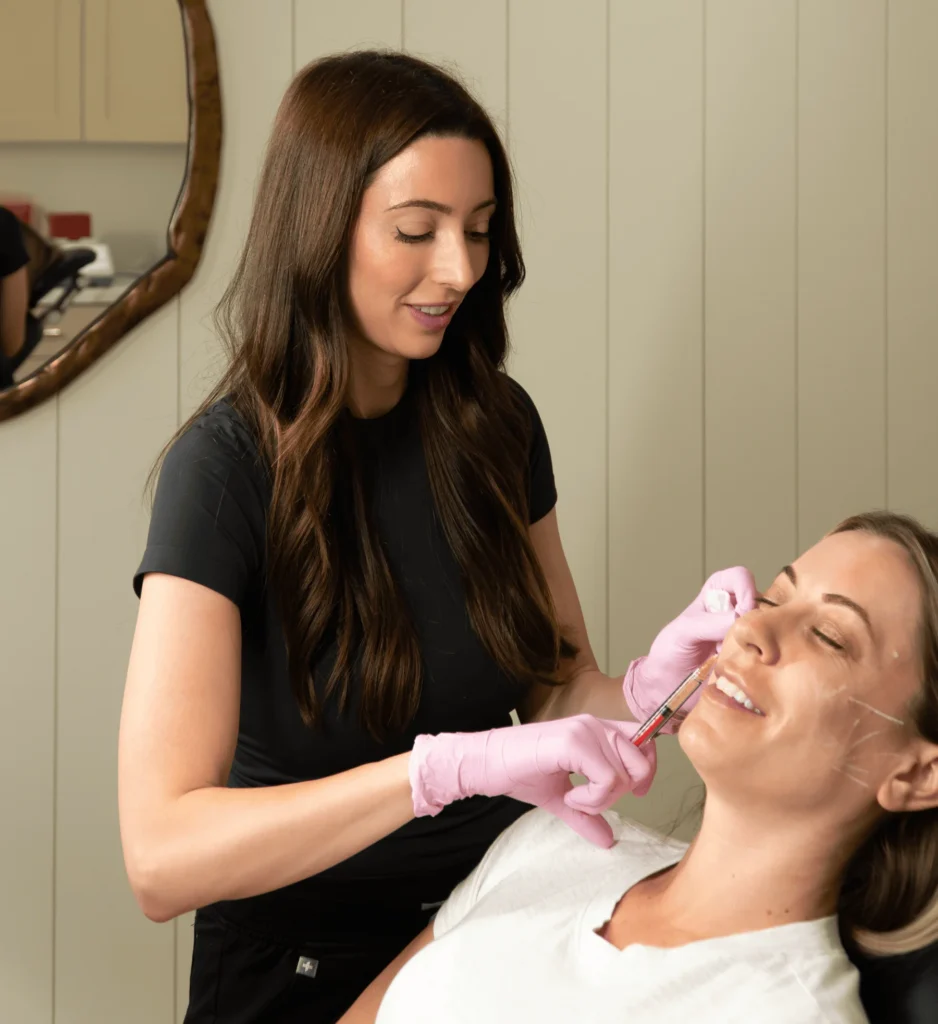
Strategic placement of hyaluronic acid filler in the pre-jowl sulcus can restore lost structure and smooth the transition along the jawline. When performed correctly, this treatment sharpens the contour without adding bulk.
Collagen Boosting Skin Treatments
Microneedling, Vivace RF, and CO2 resurfacing like CoolPeel or DEKA can help thicken, strengthen, and tighten the skin. When the skin is more resilient, it holds shape better and reduces the appearance of sagging.
Botox to Minimize Downward Pull
Small, precise doses of Botox can relax the muscles responsible for pulling the lower face downward. By softening the DAO and platysma, the jawline appears more lifted and the lower face looks smoother.
How to Treat YOUR Jowls
There is no one size fits all solution for jowls. Your ideal treatment depends on your facial anatomy, age related changes, skin thickness, lifestyle, and aesthetic goals. Some patients need a subtle lift using biostimulators, while others benefit more from a multi treatment approach targeting structure, skin strength, and muscle pull simultaneously.
If you’re noticing early jowling or more significant sagging along the jawline, a personalized plan will always give you the most natural and effective results. A tailored approach ensures that every contributing factor is addressed and that your lower face looks supported, contoured, and refined.